 Soapbox
I read the news about the National Vulnerability Database over a coffee that went cold while I sat there muttering at my phone. The short version: the NVD, the free public catalogue that quietly props up half the security tooling you and I run every day, is going under in slow motion. And the more I dug into why, the worse the taste in my mouth got.
I’m an open-source person. I think of myself as part of that community, and the NVD is one of those public goods the whole community leans on without ever really thinking about it. So my first reaction wasn’t clever or measured. It was a kick in the teeth.
The carcass and the vultures
Here’s where things actually are. In February 2024 the NVD had around 13,000 unprocessed vulnerabilities sitting in a queue waiting to be analysed. By the end of 2025 that backlog had passed 27,000. This April, NIST effectively admitted it can’t dig out: everything published before 1 March 2026 that hadn’t been enriched got swept into a bucket marked “Not Scheduled”, and going forward only the highest-risk entries get the full treatment. The rest you’re on your own with.
The reasons are grimly ordinary. The Cybersecurity and Infrastructure Security Agency stopped funding the programme in 2024. The enrichment contract lapsed that same February, and despite NIST having two years’ notice it needed a replacement, the database limped along understaffed until late November. And the volume kept climbing regardless: 48,185 CVEs in 2025, roughly 131 a day, with forecasts of the annual figure topping 60,000, getting on for ten times what it was a decade ago. No money, a fumbled handover, and a firehose. That’s the whole story.
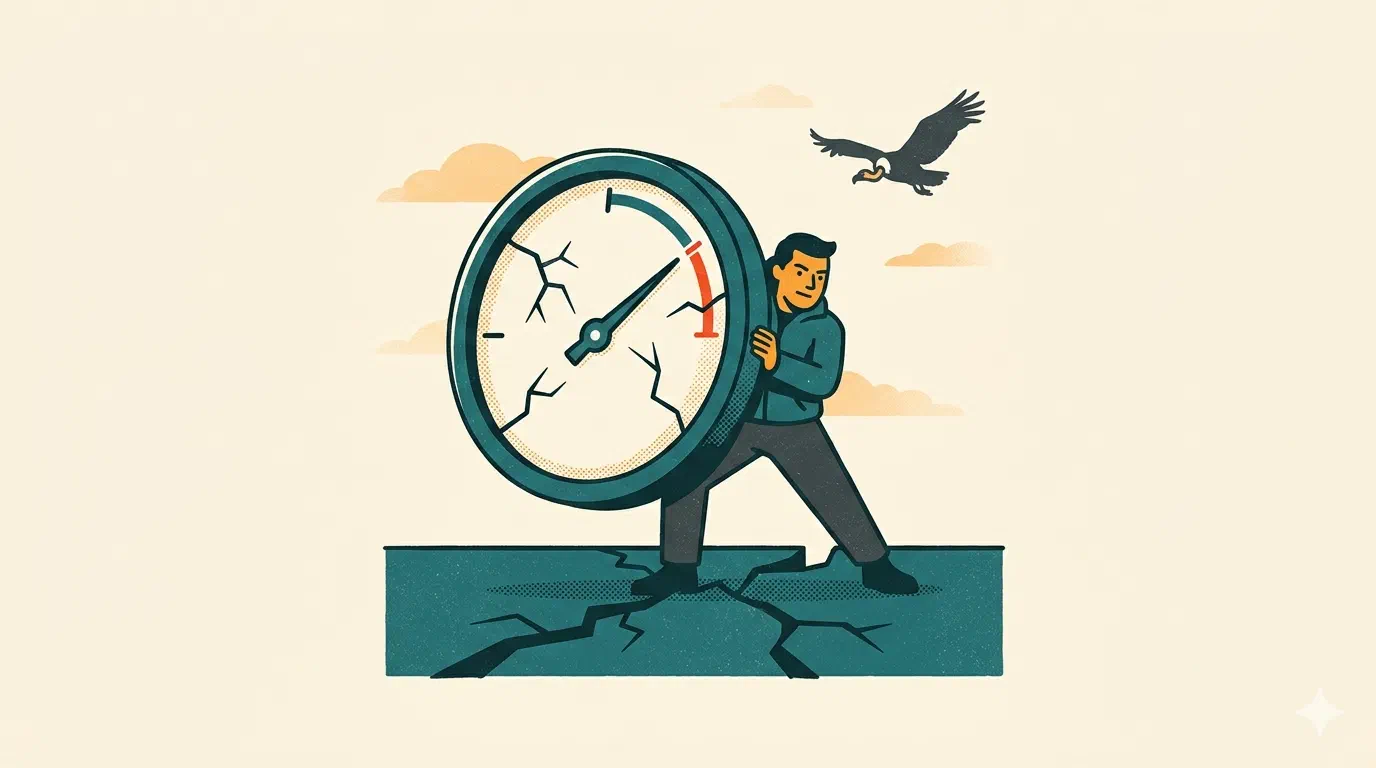
The bit that turns my stomach is what comes next. When a free public good fails, the gap doesn’t stay empty. It gets filled, and it gets filled by people selling something. There are already commercial vulnerability databases that are better resourced and more current than the NVD, and the moment the free one is visibly on the floor, every one of them sees a market. Plenty of those subscriptions cost more in a year than a small open-source project will see in donations in its lifetime. So the catalogue the little projects relied on most is exactly the one about to be priced out of their reach. Vultures circling a carcass, and the carcass is something we all built on.
The number we never checked
And then I read the part that stopped me blaming everyone else.
A Department of Commerce Inspector General audit went through the NVD’s work and found that NIST’s own severity scores matched independent assessors only 12% of the time. Read that again. Not that NIST was wrong 88% of the time, that’s not quite what it says, but that two competent parties looking at the same vulnerability landed on the same severity barely one time in eight. The score was never an objective fact handed down from on high. It was always an estimate, a judgement call, the kind of thing reasonable people disagree about most of the time.
Which is awkward, because I have spent years treating that number as gospel. And I know I’m not alone, because I’ve watched whole engineering organisations do the same thing in writing. More than one large employer I’ve had bakes the CVSS score straight into policy: anything scored 8 or above blocks the build and gets a meeting, and anything under an 8 goes through at an engineer’s discretion. When time is money, and it always is in those places, “it’s only a 6.4, ship it” is the easiest decision you’ll make all week. I’ve made it. I’ve made it without opening the advisory, without checking whether the vulnerable code path was even reachable in what we’d built, on the strength of a single number that, it turns out, two experts wouldn’t have agreed on anyway.
So before I get cross about the funding, I have to sit with my own part in this. We took a contestable estimate and bolted it to the door as a gatekeeper. We turned “a rough signal worth a closer look” into “the closer look”, and then we stopped looking. The database didn’t promise us a safety net. We just decided it was one and stopped checking underneath.
Don’t blame the robots for this one
There’s an easy villain on offer here, and I want to wave you off it. It would be tidy to say AI did this, that the flood drowning the NVD is a tide of machine-generated slop, the same dynamic I wrote about when curl’s bug bounty buckled under unverifiable reports. It’s tempting, it’s topical, and it’s mostly wrong.
The people who actually crunch the numbers are clear that the surge is largely legitimate growth. There are now more than 484 CVE Numbering Authorities, far more organisations reporting far more bugs far more thoroughly than they did a decade ago. That isn’t a quality collapse, it’s the system working as designed and simply getting bigger than its funding. Pinning it on AI would be scapegoating, and scapegoating the robots for an underfunding-and-mismanagement problem is just a way of letting the people who defunded it off the hook.
None of which means AI gets a free pass. It just isn’t the arsonist. The same machine-assisted discovery tools that found genuine bugs are also forecast to push CVE volumes higher still, and yes, one of the tools named in that forecast is the very one I poked fun at over curl. AI is an accelerant on a fire that was already burning for thoroughly human reasons. It’s a beat in this story, not the spine.
The version I’m betting on
Where does this leave the working engineer? In a harder spot than before, because the easy answer stopped being easy. My usual line, the one I keep ending these pieces on, is that the diligence is the job: pin, lock, audit, and read the actual advisory instead of trusting a number. All of that still holds. But it just got more expensive, because the data underneath the diligence is thinner and, as it turns out, was shakier than we let ourselves believe.
So I’m not going to pretend there’s a clean fix. This problem won’t solve itself, and it won’t be solved by any one of us. It needs all of us to actually support the services we depend on, with money, with contributions, with attention, so the public goods that underpin our craft are still standing in ten years. That’s the dull, grown-up part.
But I’ll end this one looking up rather than down, because for once I can. I think
the next few years bend towards safer software almost in spite of us. Modern
languages are quietly closing off whole categories of vulnerability at the source:
every memory-safety bug that a borrow checker refuses to compile is one that never
reaches a database to be mis-scored in the first place, which is rather the point
of building
a framework that contains no unsafe.
Used with proper guidance instead of left to spew slop, AI can be a genuine help
finding and triaging the things that do slip through. And the
junior engineers we keep sawing off the bottom
rung are
exactly the people who, mentored by the greybeards before they retire, could build
the next generation of vulnerability identification that the current model clearly
can’t sustain.
As for the vultures… it’s a coin toss. A lot of firms will look at the NVD on its back and see a land grab. I’d love to be proved an optimist and watch at least one of them stand tall, take all that better-resourced data and open it to open-source projects for nothing, because it’s the right thing to do and because the whole industry drinks from that well. One of them doing the decent thing would be worth more than all the press releases about responsible AI put together.
The catalogue is wobbling. The number was never as solid as we treated it. Neither of those is the end of the world, as long as we stop outsourcing our judgement to a free service we never funded and never checked, and start paying, in every sense, for the foundations we build on. Boring, unfashionable, and the only thing that ever works. I think we’re up to it.