 go-tool-base
 Orienteering
The google.api.http annotations we added in part
4
have done one job so far: they told the gateway which REST calls map to which
RPCs. But they describe the API precisely, the paths, the verbs, the request and
response shapes, and a precise description of an API is most of an OpenAPI
document. Feed that document to a viewer and you have an interactive docs site:
every endpoint listed, every field typed, and a “try it” button that calls the
real service.
So from one .proto we’ve had gRPC, then REST, and now documentation, none of
it a separate thing to write or keep in sync.
About this copy. This tutorial lives in the go-tool-base docs, and what follows is a snapshot of that page as it stood on 1 November 2026, verified there against go-tool-base v0.50.0. The docs keep pace with the framework and this copy doesn’t, so if a step here stops matching the release you’re on, the docs page has the current version.
Updated 1 November 2026. This part first went out in May against v0.6.0, and the framework has moved a long way since, so the code that was here no longer ran as written. What follows replaces it.
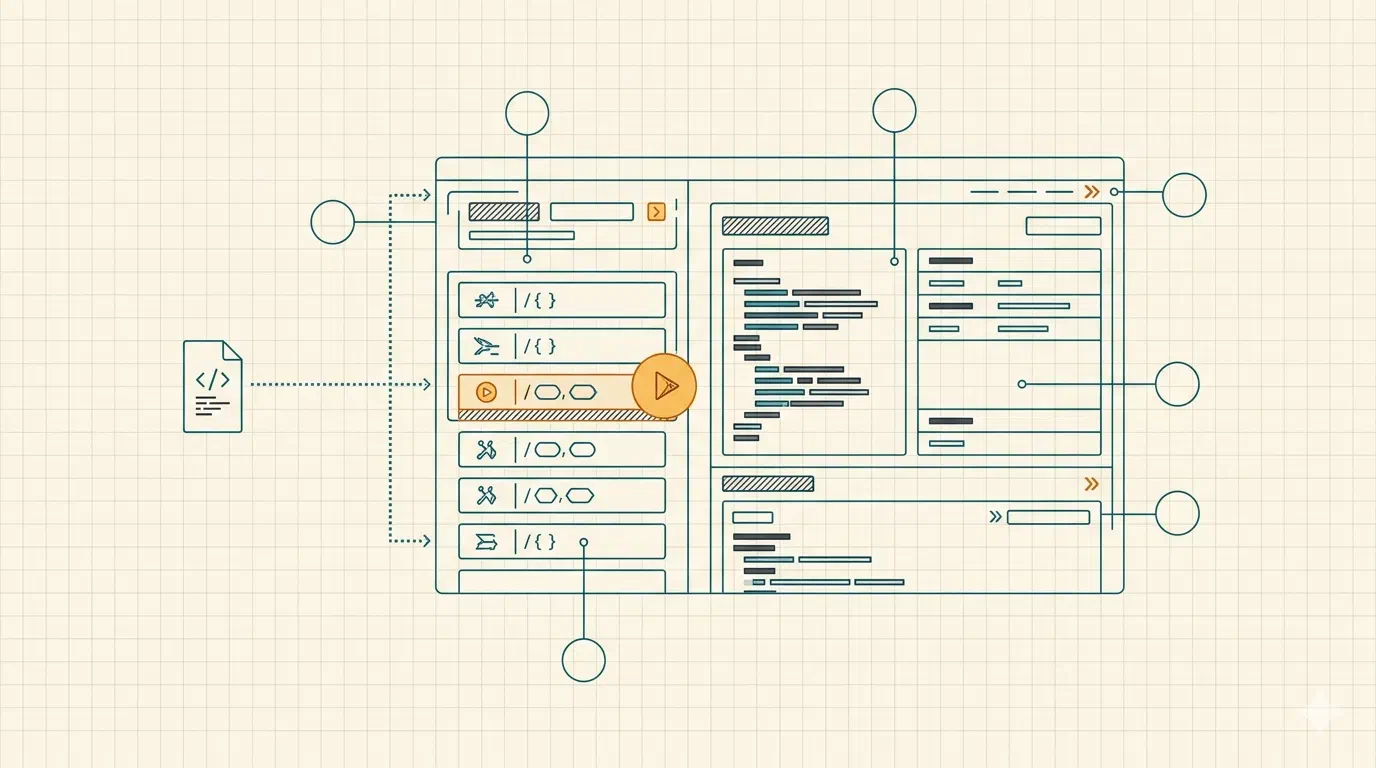
By the end of this, https://localhost:8443/docs/ is an interactive API
reference generated from the proto: every endpoint listed, every field typed,
and a console that sends real requests to the running service. You won’t
write any of it. The HTTP routes you added to the proto in the last part
describe the API, and the docs come from them.
This is the fifth part of the web-service series. It builds on Put a gateway in front of gRPC.
Allow about twenty minutes.
Before you start
- The gateway from Put a gateway in front of gRPC, with its HTTP routes in the proto.
- The same gtb release. Everything below is verified against v0.50.0.
- A browser on the same machine, for the last step.
Generate the OpenAPI document
The OpenAPI document comes from one more buf plugin. grpc-gateway has its own
generator, but it writes OpenAPI v2 (the older Swagger format), and the docs
viewer below wants v3. kollalabs/protoc-gen-openapi
reads the same google.api.http routes and writes v3. Install it:
go install github.com/kollalabs/protoc-gen-openapi@latest
Add it to the end of buf.gen.yaml:
  - local: protoc-gen-openapi
    out: internal/docs/assets
    opt:
      - title=Macguffin API
      - default_response=false
out writes the document straight into the package that serves it, next.
title becomes the document’s title. default_response=false stops the
generator adding a catch-all error response to every operation.
Regenerate:
go generate ./...
head -20 internal/docs/assets/openapi.yaml
# Generated with protoc-gen-openapi
# https://github.com/kollalabs/protoc-gen-openapi

openapi: 3.0.3
info:
    title: Macguffin API
    version: 0.0.1
paths:
    /v1/macguffins:
        get:
            tags:
                - MacguffinService
            summary: ListMacguffins
            operationId: MacguffinService_ListMacguffins
            parameters:
                - name: pageSize
                  in: query
                  schema:
                    type: integer
                    format: int32
The list’s page_size request field became a pageSize query parameter. The
gateway accepts it, because it maps any request field that isn’t in the path or
the body from the query string.
Serve the document and the docs site
The go/transport-openapi module
serves an OpenAPI document and a
Stoplight Elements docs site from
one call. The site’s JavaScript and CSS ship inside the module, so your project
only carries its own document. Add it:
go get gitlab.com/phpboyscout/go/transport-openapi
At v0.50.0 that also moves gitlab.com/phpboyscout/go/transport up a patch
release, from v0.6.3 to v0.6.4. That’s expected, and the build is fine with it.
Create internal/docs/docs.go. It embeds the generated document and registers
both endpoints:
package docs

import (
	_ "embed"
	"net/http"

	openapi "gitlab.com/phpboyscout/go/transport-openapi"
)

//go:embed assets/openapi.yaml
var spec []byte

func Register(mux *http.ServeMux) error {
	return openapi.Register(mux, spec, openapi.WithTitle("Macguffin API"))
}
openapi.Register mounts two routes:
| Path | Serves |
|---|---|
GET /openapi.yaml | the document, as application/yaml |
GET /docs/ | the docs site |
Mount it beside the API
In pkg/cmd/serve/main.go, import the package with the project’s own imports:
"github.com/myorg/mytool/internal/docs"
Register it on the same mux as the gateway and the page:
	mux := http.NewServeMux()
	mux.Handle("/v1/", gw)
	mux.Handle("/", site.New(store).Routes())

	if err := docs.Register(mux); err != nil {
		return err
	}
The same mux is what makes the “try it” console work. The docs page and the API share an origin, so the browser lets the console call the API, with no CORS rules to write. Put the docs on another port or host and the browser blocks those calls.
/openapi.yaml and /docs/ are more specific than the site’s /, so they take
priority and the page stays where it was.
Tidy, build and run:
go mod tidy
just build
./bin/mytool serve
Check the endpoints
CA="$(mkcert -CAROOT)/rootCA.pem"
curl --cacert "$CA" -sS -D - -o /dev/null https://localhost:8443/openapi.yaml | grep -i content-type
curl --cacert "$CA" -sS -o /dev/null -w '%{http_code} %{content_type}\n' https://localhost:8443/docs/
content-type: application/yaml
200 text/html; charset=utf-8
/docs without the slash redirects to /docs/.
Try it in the browser
Open https://localhost:8443/docs/. If you ran mkcert -install, there’s no
certificate warning. The sidebar lists the three operations under
MacguffinService, and the three schemas.
Pick ListMacguffins and press Send API Request. The console calls the live API and shows the answer:
200 OK

{
  "macguffins": [
    {
      "id": "m-1",
      "name": "maltese-falcon",
      "quantity": 1
    }
  ]
}
That came from your store, through the gateway and the gRPC service. The docs also show a curl command for each request, ready to copy.
Keep it in step
The document is generated from the proto on every just build, and embedded in
the binary. Add a field to a message or an RPC with a route, and the next build
updates the gRPC API, the REST API and the docs together. There’s nothing to
keep in sync by hand.
Where this leaves you
From one .proto file you get a gRPC API, a REST API through the gateway, and
live docs with a working console, all served by one tool, on one certificate,
under one controller. The last part of the series adds observability: logs,
metrics and traces for every request.
What to read next
- Serve API docs: changing the paths and title, and the generator’s options.
- go/transport-openapi: the full
RegisterAPI.