 Campfire
I named myself, professionally, after a rule about litter.
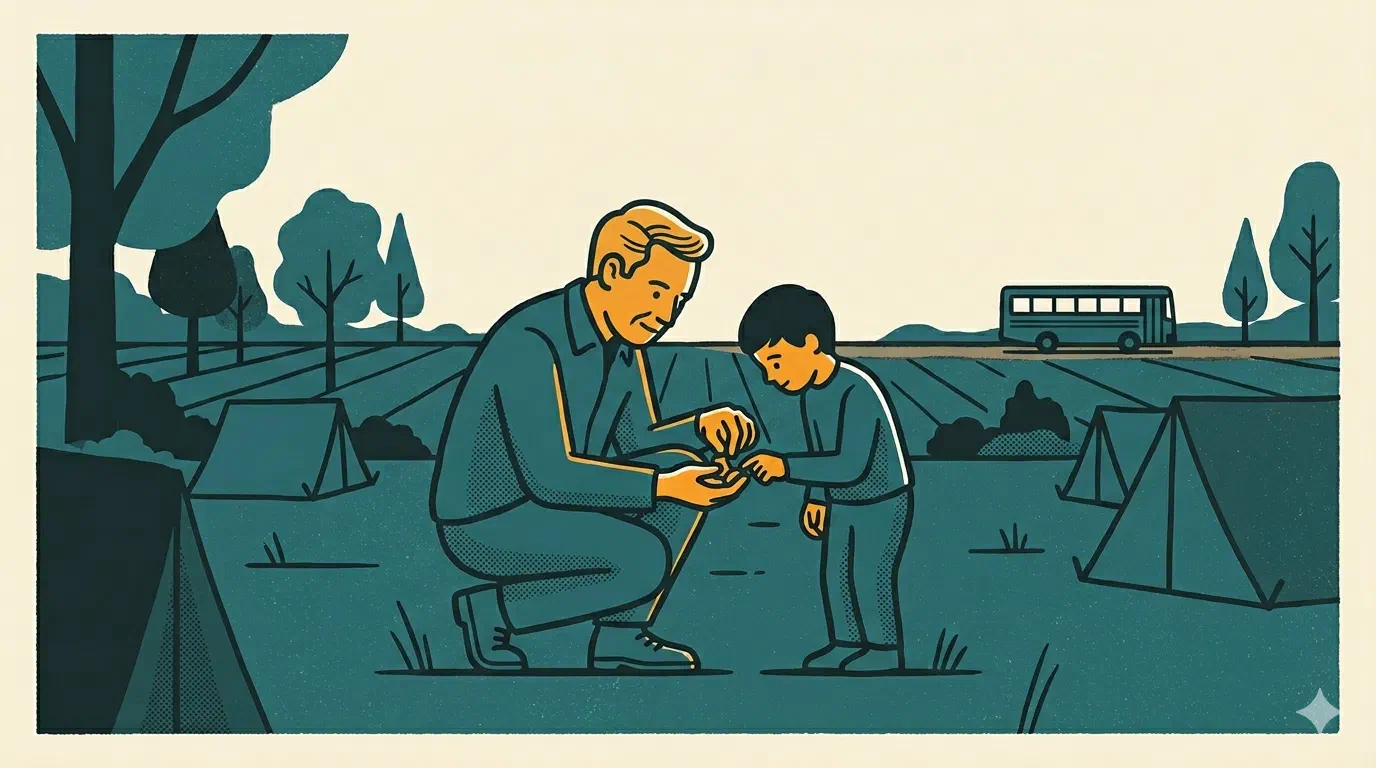
The Boy Scout Rule is the one every camp drills into you: leave the campsite cleaner than you found it. Robert Baden-Powell’s version, in the last message he left for Scouts to be found among his papers after he died, was tidier and bigger: “try and leave this world a little better than you found it”. But the campsite is where a child first meets it. Ten years ago I stood up at a conference in a Scout uniform and argued that the same rule runs a codebase: leave the code better than you found it, every time you touch it. I still think I was right. I’ve just spent the decade since learning that the rule is bigger, and a good deal harder, than the tidy version I was selling then.
A clarification I owe you up front: I’m not an active Scout any more. I was one as a boy and again as an adult leader, and a few years ago I stepped back to put my energy elsewhere. The uniform’s in a box. The creed isn’t… And that, I’ve come to think, is the only real test of whether a thing was ever a value or just a rule someone was checking up on. A rule you follow while the warden’s watching is a rule. One you keep after you’ve handed back the woggle is a value. The campsite taught me the rule. Twenty-odd years of work taught me it was a value, and what that costs.
It’s the same rule, at every size
The thing people get wrong about the Boy Scout Rule is thinking it’s small. They file it next to “tidy your desk”, a nicety for when you’ve got a spare minute.
It isn’t small, and it isn’t about size at all. It scales from a single function to an entire company without changing shape, because the load-bearing part was never the litter or the lines of code. It’s the intention: that you leave a place in better order than you found it, on purpose, as a matter of course. Pick up one crisp packet on the way to the bus and the field is measurably better for the next troop. Fix one silently-failing lint rule on your way through a file and the codebase is measurably better for the next engineer. The act is trivial. The habit, held by enough people, is how a whole environment stops degrading and starts improving, quietly, without anyone running a project to do it. A campsite, a codebase, a team, a company: same rule, same intention, bigger blast radius.
Anyone can pick up litter; a leader buys a vacuum
Where it stops being a personal virtue and becomes a job is the moment you’re responsible for more than your own hands.
One scout picking up one crisp packet leaves the field a little better. But I can’t follow forty engineers around pointing at litter, and I wouldn’t want to. So the work of leadership is to stop relying on individual heroics and put a vacuum on the whole campsite: the standards that make the tidy thing the default, the automation that catches the mess before a human has to, the CI gate that won’t let the litter on the bus in the first place. On the teams I’ve run it became a mantra, that every project ticket you pick up, you also pick up something small alongside it, a CVE bump, a failed check, a confusing name. None of those was anyone’s job. All of them made the system better to work in, easier to understand, less prone to bite someone at three in the morning.
And here’s the part that surprised me, because I’d assumed the hard bit was getting people to care. It wasn’t. The scarce resource isn’t willingness, it’s confidence. Engineers see the litter. What they lack, under a deadline and the pressure coming from every direction, is the permission to bend down and pick it up, the belief that thirty minutes spent on something nobody asked for won’t be the thing they’re hauled up for. Giving people that permission, and meaning it, and backing them when they take it, turned out to be most of the job.
Then get on the bus
If I stopped there you’d have a poster, and posters are how good ideas turn into sanctimony. So here is the limit, because a rule without judgement is just yak-shaving in a woggle.
Every camp has the over-keen scout who is still deep in the bushes hunting for one last sweet wrapper while the rest of the troop has loaded the bus and the engine’s running. That scout hasn’t understood the rule better than everyone else, they’ve understood it worse. They already have a bagful; the field is already better than they found it; and now the right thing, the thing the rule is actually in service of, is to get on the bus so forty people get home. The litter stopped being the point a while ago.
It’s identical with engineers. Chasing the next improvement is a good instinct right up until it costs the team the thing that actually mattered, the release, the commitment, the colleague waiting on you. It’s a team sport, and the rule only works in the hands of a team player. I have, more than once, had to tell a good engineer to stop making something better and ship it, which feels like contradicting everything above and isn’t. Knowing when “better” is done, when the bag is full enough and it’s time to drive home, is not a betrayal of the rule. It’s the adult version of it.
The campsite was never the point
Which brings me to the thing it took me far too long to say out loud. The code is the easy half. The campsite was never the point.
“Leave it better than you found it” applies, most of all and most lastingly, to people. Every engineer I’ve helped pick up a new tool, every junior I’ve talked through a design they were afraid of, every review I treated as teaching rather than gatekeeping, that is the rule, far more than any lint fix. Code I improve decays; entropy comes for it eventually. A person I help to grow carries that forward into work I’ll never see, and teaches it to people I’ll never meet. If you want the rule to actually compound, you stop applying it to the codebase and start applying it to the people who’ll outlast your codebase. The campsite is just where you practise.
The scout who doesn’t get it
And then, occasionally, there’s the one who doesn’t get it. The scout, or the engineer, who won’t pick up the litter, who treats the whole idea as someone else’s fuss, who hands the messy work to the next person without a second thought.
Our industry has a reflexive answer to that person: route around them, manage them out, label them and move on. I’ve never been able to make that answer sit right, and I’ve stopped trying to. That person isn’t flawed. They’re not a write-off and they don’t deserve to be quietly frozen out. Far more often they’ve simply never been shown why it matters, or they’re carrying something that’s left them no room to care this week. What they need is the least scalable thing I have: time, patience, and the assumption of good faith. The same thing, now I think about it, that somebody once spent on a younger me before the rule stuck.
That’s the hardest application of the whole thing, and the one no standard and no amount of automation will ever do for you. You can put a vacuum on a campsite. You cannot automate the slow, human work of helping a person understand why they’d want to leave a place better than they found it, and that it’s worth doing for the rest of their life, long after anyone’s checking, long after the uniform’s in a box.
I stepped back from Scouting, and I kept the rule, because once upon a time someone gave me the patience to understand it rather than just obey it. Ten years on from standing up in that uniform, I’m clearer than I’ve ever been about what the badge was really for. Not the campsite. Never the campsite. The least I can do with the rule that named me is pass it on the way it was passed to me, one person at a time, and then have the good sense to get on the bus.